

Transforming Rural Healthcare: Swasthyarekha’s Tech-Driven Initiative for Early Cancer Detection at Rahanja


Transforming Rural Healthcare: Swasthyarekha’s Tech-Driven Initiative for Early Cancer Detection at Rahanja
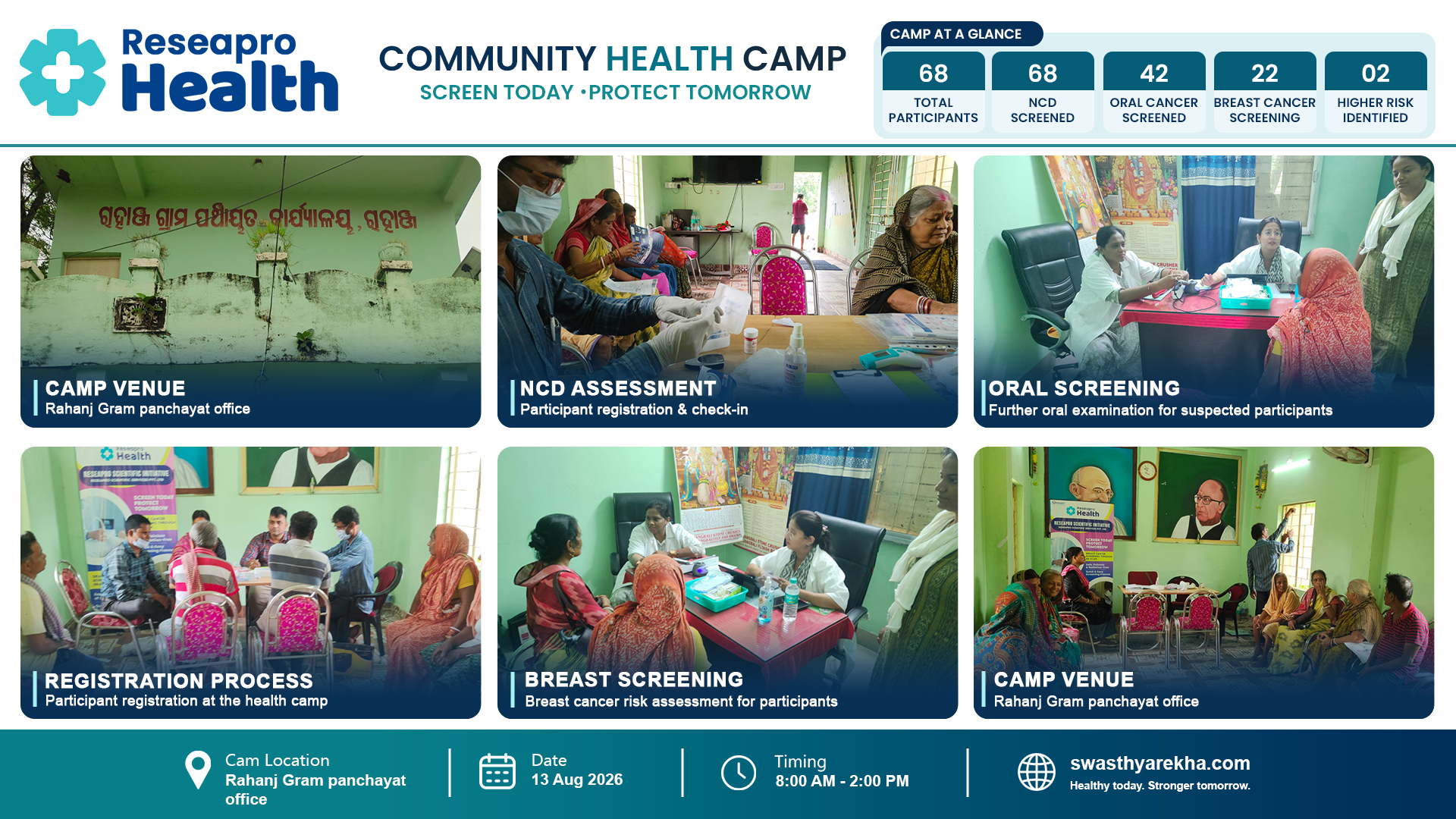
For many communities, preventive healthcare begins with access—the opportunity to identify health concerns before they become difficult to treat. On 13 August 2026, Swasthyarekha, in association with Yuva Vikash Foundation, Balasore, conducted its 13th community health screening camp at the Rahanja Gram Panchayat Office, Bhadrak, Odisha.
The camp brought NCD assessment, oral cancer screening and breast cancer screening directly to the community, enabling residents to access preventive healthcare services in a familiar and convenient setting.
Camp 13 at a Glance
- Date:13 August 2026
- Location: Rahanja Gram Panchayat Office, Bhadrak, Odisha
- In association with: Yuva Vikash Foundation, Balasore
- Total Participants: 68
- NCD Screening: 68
- Oral Visual Observation: 68
- Orals can Screening: 42
- Suspected Oral Cases: 1
- Clinical Breast Examination (CBE): 35
- BR Scan Screening: 22
- Suspected Breast Cases: 1
A Complete Health Check Begins with NCD Screening
The screening process began with NCD assessment for all 68 participants. The health team assessed participants for important health indicators associated with common non-communicable diseases.
Including NCD screening alongside cancer screening allowed the camp to address preventive healthcare more comprehensively, helping participants understand the importance of monitoring their health even when they may not have noticeable symptoms.
Oral Screening: 68 Examined, One Suspected Case Identified
Oral health screening was an important part of the camp. All 68 participants underwent an oral visual observation, giving the screening team an opportunity to examine the oral cavity for visible changes or abnormalities.
Of these, 42 participants were additionally screened using the oral Scan device. The technology-assisted screening provided digital examination support alongside the visual assessment.
The screening identified one suspected oral case, highlighting the importance of accessible community-based screening in recognising abnormalities that may require further clinical evaluation.
Breast Screening: 35 Clinical Examinations and One Suspected Case
The camp also included breast health screening. A total of 35 women underwent Clinical Breast Examination (CBE).
Of these, 22 participants were additionally screened using the BR Scan device, providing an additional technology-assisted assessment.
The screening process identified one suspected breast case, and the participant was advised to undergo appropriate follow-up and further clinical evaluation.
Technology Supporting Community-Based Screening
Devices such as oral Scan and BR Scan support Swasthyarekha's approach of bringing technology-assisted screening closer to communities.
At Rahanja, these tools were used alongside clinical examination rather than as a replacement for professional assessment. Combining visual observation, clinical examination and device-based screening help create a more structured approach to identifying participants who may require further evaluation.
Most importantly, screening is only the first step. Participants with suspected findings need timely follow-up and appropriate diagnostic assessment.
Why Community Screening Matters
The Rahanja camp demonstrates how preventive healthcare can reach people in spaces that are already familiar to them. A Gram Panchayat office can become a temporary health-access point, reducing some of the practical barriers that prevent people from seeking routine screening.
For the 68 participants who attended the camp, the programme provided an opportunity to undergo NCD assessment and cancer screening without needing to begin the process with a hospital visit.
Identifying one suspected oral case and one suspected breast case further reinforces the value of creating accessible opportunities for early screening.
From Screening to Follow-Up
Identifying suspected cases is not the end of the screening process. Participants with findings that require further assessment should be guided towards appropriate clinical evaluation and follow-up.
At the same time, participants with no suspected findings were encouraged to remain aware of their health, understand the importance of regular screening and seek medical advice whenever they notice concerning symptoms.
Through this approach, Swasthyarekha aims to build a culture in which screening becomes a routine part of preventive healthcare rather than something people seek only after symptoms appear.
Taking Early Detection Across Communities
From urban neighbourhoods to Gram Panchayat communities, Swasthyarekha continues to take preventive health services closer to the people who need them.
The Rahanja community screening camp was made possible by the support of Yuva Vikash Foundation, Balasore, and the participation of the local community. Every screening contributes to a larger goal: raising awareness, encouraging timely medical attention and making early detection a more accessible part of everyday healthcare.
Early Detection. Better Care. Healthier Communities
Reviews & Comments
No reviews yet. Be the first to write one.